




Hey there! As a supplier of new wheel loaders, I often get asked about the difference between a standard and a high - lift new wheel loader. So, I thought I'd break it down for you in this blog post.
Basics of Wheel Loaders
First off, let's quickly cover what a wheel loader is. A wheel loader is a heavy - duty machine used in construction, mining, agriculture, and other industries. It's great for moving large amounts of materials like dirt, gravel, sand, and even snow. The basic design consists of a front - mounted bucket attached to a set of arms, and it's mounted on four large wheels.
Standard Wheel Loaders
Standard wheel loaders are the workhorses of the industry. They're designed for general - purpose tasks. The lifting height of a standard wheel loader is typically enough for most common jobs. For example, if you're loading materials into a dump truck or moving stuff around a construction site, a standard wheel loader will do the job just fine.
One of the main advantages of a standard wheel loader is its simplicity. They're easier to operate, and maintenance is usually less complicated. The parts are more widely available, which means less downtime if something goes wrong. Also, they're generally more affordable upfront.
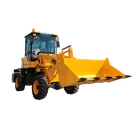
If you're in the market for a standard wheel loader, we've got some great options. Check out our 2 Ton Compact Wheel Loader. It's perfect for small to medium - sized jobs. It's compact, easy to maneuver, and has all the power you need for basic material handling tasks.
High - Lift Wheel Loaders
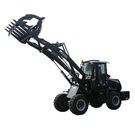
Now, let's talk about high - lift wheel loaders. These bad boys are designed for jobs that require extra height. Maybe you're loading materials into a tall hopper or a high - sided truck. A high - lift wheel loader can reach those heights with ease.
The main difference between a standard and a high - lift wheel loader is, of course, the lifting height. High - lift models have longer arms or a different hydraulic system that allows them to lift the bucket much higher. But this extra height comes with some trade - offs.
High - lift wheel loaders are usually more expensive. The additional components and engineering required to achieve the extra height add to the cost. They can also be a bit more complex to operate. The longer arms can make the machine a bit less stable, especially when the bucket is fully loaded at maximum height. So, operators need to be more careful and have a bit more skill.


However, if you have jobs that demand that extra height, a high - lift wheel loader is worth the investment. Our 2.2 Ton Multifunctional Wheel Loader is a great high - lift option. It combines the power of a larger machine with the versatility of a smaller one, and it can reach heights that a standard loader can only dream of.
Performance and Capacity
In terms of performance, standard wheel loaders are great for quick, repetitive tasks. They can move a decent amount of material in a short time. The shorter arms allow for faster cycle times, which means you can get more work done in less time.
High - lift wheel loaders, on the other hand, might have slightly slower cycle times because of the longer arms. But they make up for it in the ability to handle jobs that standard loaders can't. When it comes to capacity, both types can come in different sizes. You can find standard and high - lift loaders with different bucket capacities to suit your specific needs.
Applications
Let's look at some real - world applications. In a construction site where you're building a small building, a standard wheel loader can be used to move dirt, gravel, and construction debris. It can load materials into trucks and move them around the site efficiently.
But if you're working on a large - scale project like a multi - story building or a mining operation, a high - lift wheel loader might be necessary. You might need to load materials into tall silos or high - sided trucks. In agriculture, a standard loader can be used for moving hay bales or cleaning out barns, while a high - lift loader could be useful for loading grain into tall storage bins.
Maintenance
Maintenance is an important factor to consider. Standard wheel loaders are generally easier to maintain. The shorter arms and simpler hydraulic systems mean there are fewer parts that can go wrong. You can usually perform basic maintenance tasks like oil changes and filter replacements without too much hassle.
High - lift wheel loaders, with their more complex systems, might require more specialized maintenance. The longer arms and the hydraulic components that allow for the extra height need to be inspected regularly to ensure they're in good working condition. But don't worry, if you choose one of our loaders, we'll provide you with all the support you need for maintenance.
Choosing the Right One for You
So, how do you decide whether a standard or a high - lift wheel loader is right for you? First, think about the types of jobs you'll be doing. If most of your work involves loading into standard - height trucks and moving materials around a normal - height site, a standard loader is probably the way to go.
But if you have jobs that require loading into tall containers or high - sided trucks, a high - lift loader is a must. Also, consider your budget. If you're on a tight budget and don't need the extra height, a standard loader will save you money upfront and on maintenance.
We have a wide range of wheel loaders to suit different needs. Our Compact Wheel Loader series is a great place to start your search. Whether you need a standard or a high - lift model, we've got you covered.
Conclusion
In conclusion, the main difference between a standard and a high - lift new wheel loader is the lifting height. Standard loaders are great for general - purpose tasks, are easier to operate and maintain, and are more affordable. High - lift loaders, on the other hand, are designed for jobs that require extra height, but they come with a higher price tag and more complexity.
If you're still not sure which type of wheel loader is right for your business, don't hesitate to reach out. We're here to help you make the best decision. Whether you're a small - scale contractor or a large - scale industrial operation, we can find the perfect wheel loader for you. Contact us today to start the procurement process and let's get you the right machine for your needs.
References
- Construction Equipment Handbook
- Wheel Loader Manufacturer's Manuals