

Latest Products


Contact Us
- The southwest corner of Runcheng Street and Donghu Road, Sadin Holdings 2nd Industrial Park, Anqiu Economic Development Zone, Weifang City, Shandong Province.
- neallliu@gmail.com
- +86-536-4265938
Lapuda Industry Equipment (Shandong) Co., Ltd. (hereinafter referred to as Lapuda) is a high-end intelligent industry equipment enterprise approved by the National Development and Reform CCapabilityommission,Lapuda focuses on the research and development, manufacturing, distribution and after-market operations of special construction machinery. It is an important strategic core business of Sadin Holding Group. It is a major project in Shandong Province, a preferred project for new and a key city investment enterprise.with registered capital CNY 180 million, total area of 70 ha and building area of 140,000㎡.
Lapuda Industry has a high quality and stable industrial supply chain. We have set up good relationships with many famous suppliers, such as WEICHAI, CUMMINS, YUCHAI, YANMAR, KUBOTA, CARRARO, KAWASAKI, REXROTH, EATON,SHANTUI,Xuzhou Armour Rubber, etc.
Why choose us?
Professional team
Our professional team collaborate and communicate effectively with one another, and are committed to delivering high-quality results. They are capable of handling complex challenges and projects that require their specialized expertise and experience.
Competitive price
We offering a higher-quality product or service at an equivalent price. As a result we have a growing and loyal customer base.
Long warranty
We are confident in the quality of our products and are willing to provide you with long-term technical service support.
Rich experience
Dedicated to strict quality control and attentive customer service, our experienced staff is always available to discuss your requirements and ensure complete customer satisfaction.

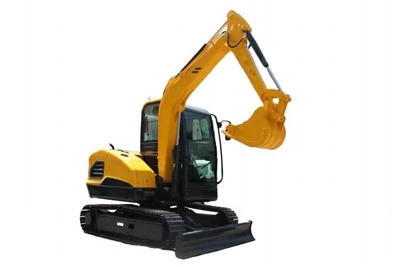
 LE40 Crawler Excavator
This crawler excavator is equipped with an air-conditioned cab, which is very suitable for efficient work in complex terrain and cold environments!
Add to Inquiry Crawler Excavator With Cab
Strengthen the design of sealed cab and heating air conditioner to make crawler excavator with cab more resistant to severe cold, so you can stay warm while working.
Add to Inquiry 1.8 Ton Multifunctional Agriculture Small Excavator
The weight of 1.8 tons makes Small Crawler Excavator Excavation Machine more convenient for handling and moving, reducing transportation costs.
Add to Inquiry 0.8 Ton Small Household Excavator
LE08 0.8 ton small houesehold excavator is the smallest one in LPD excavator family.
Add to Inquiry 1 Ton Kubota Engine Mini Excavator
LE10 is 1 ton Kubota engine mini excavator in our LPD excavator family. It is widely used in household, garden, farm, public park and channel clean-out, etc.
Add to Inquiry Euro V Small Excavator Digger
LE 12 is a 1.2 ton Euro V small excavator digger in our LPD excavator family.
Add to Inquiry Small Crawler Excavator Excavation Machine
The excavation machine is equipped with Kubota engine, with side-swing digging arm and telescopic track.
Add to Inquiry Euro V Engine CE Mini Excavator
All the members in LAPUDA excavator family are approved by CE certificate. And EURO V engine is available for all the machines. All of the LPD series mini Excavator are popular in Europe.
Add to Inquiry Zero Tail Swing Mini Small Digger Excavator
Yanmar (EPA certified), Kubota (CE certified) and Changchai engines are optional to meet with the different demands to environmental protection and cost control.
Add to Inquiry 9 Ton Wheeled Excavator
LPD 90 The turbocharged engine has strong power, achieve perfect matching and reduce power loss. famous brand hydraulic parts, small power loss, high efficiency and energy saving, high reliability
Add to Inquiry 15 Ton Wheeled Excavator
LPD 150 wheeled excavator has a strong power engine, flexible and exquisite enough to cope with a variety of working conditions.
Add to Inquiry
What is Excavator
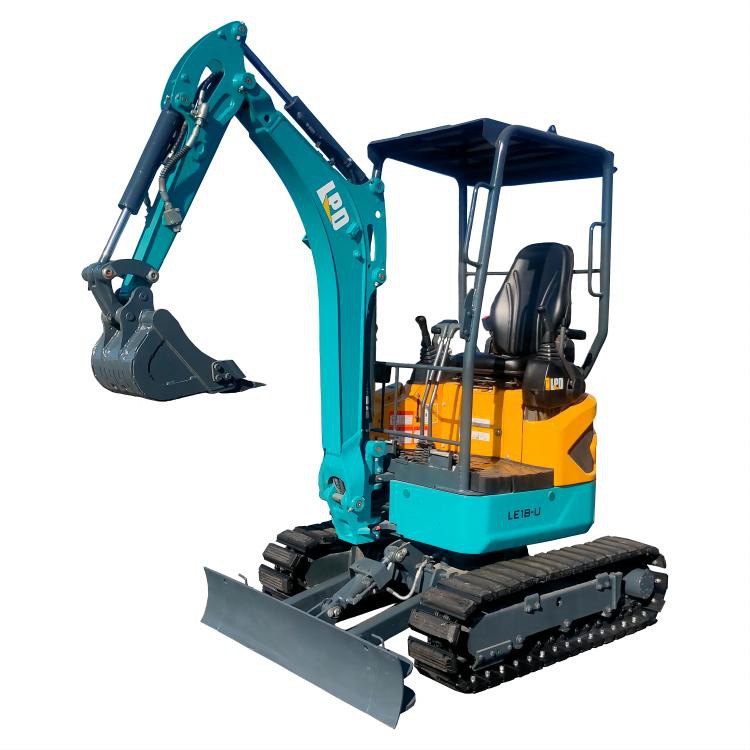
An excavator is a piece of heavy machinery that is used for digging and removing earth, rocks, and other materials. It is equipped with a cab, boom, stick, bucket, engine, undercarriage, and hydraulic system that work together to provide power and precision. Excavators can be used for digging foundations, trenches, and excavation sites, as well as for removing materials and debris from construction sites.
Versatility
Excavators are incredibly versatile machines that can handle a wide range of tasks, from digging to demolition. They are equipped with a range of attachments that make it easy to switch between tasks, making them ideal for use in multiple industries.
Efficiency
Excavators are known for their efficiency, and they can handle large amounts of material in a short amount of time. They also have high-powered hydraulic systems that allow them to work quickly and efficiently, reducing the amount of time and labour required for a project.
Power and strength
Excavators are equipped with powerful engines and hydraulic systems, making them strong and capable of handling tough and heavy-duty tasks. They can dig deep into the ground, break down large structures, and move massive amounts of materials.
Precision and control
Excavators are equipped with precision controls and instruments that allow the operator to perform tasks with accuracy and control. They are equipped with joysticks and control panels that make it easy for the operator to manoeuvre the machine and control the attachments.
Improved safety
Excavators are designed to improve safety in the workplace. They are equipped with safety features, such as stability control and emergency shut-off buttons, that help prevent accidents and injuries. Additionally, they reduce the amount of manual labour required, making work processes safer and more efficient.
Types of Excavator
Wheeled excavators
A wheeled excavator is a type of heavy construction equipment that is equipped with wheels instead of tracks. The use of wheels in place of tracks enables these vehicles to maintain the same level of power while simultaneously improving their speed and manoeuvrability on concrete, asphalt, and other flat surfaces.
Dragline excavators
The dragline excavator is a bigger excavator that functions using a different technique than traditional excavators. The apparatus makes use of a hoist rope system that may be coupled to a bucket via the use of a hoist coupler. The other side of the bucket is attached to a dragline that extends all the way from the bucket to the cab of the machine. The dragline is responsible for pulling the bucket towards the driver, while the hoist rope is responsible for raising and lowering the bucket.
Crawler excavators
Crawler excavators are superior to other huge excavators since they do not move on wheels but rather on two massive, unending tracks. These excavators are ideal for mining and heavy-duty construction work. These excavators, which are often referred to as compact excavators, make use of hydraulic power systems to lift heavy trash and dirt.
Suction excavators
Suction excavators, which are also known as vacuum excavators, are equipped with a suction pipe that is capable of producing up to 400 horsepower. The excavator fires an initial water jet to break up the ground. After that, the pipe, which has pointed teeth along its edge, generates a vacuum that removes the dirt and debris at a speed of up to 200 kilometres per hour. Because it may reduce the risk of damaging sensitive subterranean applications by more than 50%, a suction excavator is an excellent choice for these kinds of jobs.
Skid steer excavators
Skid steers, in contrast to conventional excavators, include booms and buckets that are oriented away from the operator. Because of this configuration, the attachments may extend over the cab rather than around it, which makes these excavators suitable for working in locations that are more constrained and for navigating more complex manoeuvres.
Mini excavators
Mini excavators are a smaller and lighter version of the normal excavator. They are capable of avoiding ground damage and fitting through congested and tight areas such as parking lots and inside spaces. In recent years, an increasing number of contractors have begun employing mini excavators. Mini excavators, which are sometimes referred to as compact excavators, generally include a decreased tail swing or even a zero tail swing to negotiate tighter bends and avoid coming into touch with any impediments.
Long reach excavators
The arm and boom components of a long-reach excavator are stretched out farther than those of a standard excavator. The layout makes it possible to carry out operations more effectively in areas that are difficult to access. The horizontal reach of the extended arm of the excavator may exceed one hundred feet.
Excavation and earthmoving
When one thinks of excavator uses in construction, the most common function that comes to mind is excavation and earthmoving tasks. Like any masterpiece, a construction project requires a smooth, blank canvas that is free from debris like rocks and loose soil. Depending on the scale of your project, there are a number of different excavator types that you can choose from based on your needs, budget, and project scale.
Demolition
Even for many professionals in the construction industry, excavators may not be the first piece of heavy-duty equipment that come to mind when you think about a demolition job. Wrecking balls are often the more likely solution for a demolition job, but that does not mean that they are the only tool for the job. Some excavators are more than able to accomplish your demolition task, while still being fit for other deliverables on your project timeline. So, for better efficiency, kill two birds with one stone with an excavator rental in the Philippines that can tear down a building and lay the foundation for the next.
Mining and pipe-laying
With a degree of subterranean activity, mining and pipe-laying require powerful excavator types that can survive the constant pulling of heavy loads, as well as a steady hoist and drop hydraulic or electric motor system that can safely transport heavy pipes or mining finds. Excavator types that can fulfill this task category are usually armed with elongated, barebones booms that can withstand the constant horizontal and vertical load pulling required of these tasks.
Roadworks
From skyways and highways to bridges and tunnel roads, the infrastructure that goes into our roadwork would not be possible if not for the power and efficiency that excavators can bring to a project. By utilizing excavators for a roadwork job, you are able to create strong foundations for roads that can bear the weight of vehicles and loads and withstand the elements.
Construction
Whether residential or commercial, excavator equipment is a must for any construction project. The ability to dig deep trenches for multi-story buildings is a must for durable and long-lasting foundations. Furthermore, the flexibility that excavators afford for heavy lifting materials is a vital addition for compact work sites that require mobility when transporting items around the project.
Components of Excavator
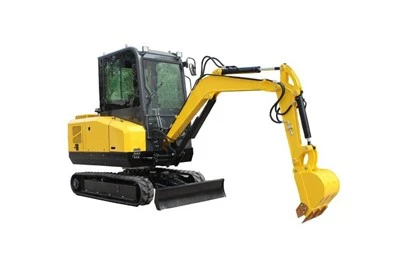
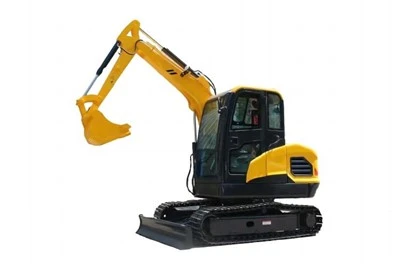
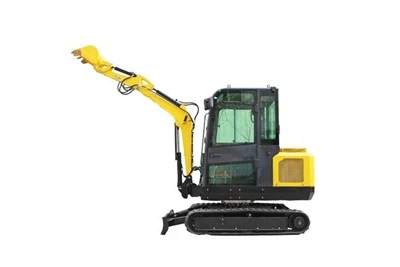
Track chains
Track chains are a crucial component excavators. It consists of an interconnected metal links fastened together to create a continuous Track which provides required traction or machine movement at site. These links are typically made from high-strength steel and are designed to withstand the significant stresses and strains generated when these Excavators operate on uneven or rocky terrains.
Idler
An idler is a component of excavators used to support and guide the track chain. It is typically located at the front side of the machine and is responsible for maintaining the track tension, which helps to reduce wear & Tear and extends the lifespan of the track chain. The idler consists of a stationary wheel that rotates on a stationary axle, and it is designed to maintain a constant distance between the track chain and the ground.
Travel motor
The travel motor is a critical component of an excavator that enables it to move from one location to another. It is a hydraulic motor mounted directly onto the final drive and utilizes Hydraulic system flow to drives the tracks and provides mobility to the machine. The travel motor receives hydraulic fluid from the machine's hydraulic system and converts the pressure into rotational force, which drives the tracks forward or backwards. The motor is designed to withstand the significant stresses and strains generated when the excavator operates on challenging terrain.
Cabin
The cabin in an excavator is the enclosed operator compartment where the operator sits to control and operate the machine. The cabin is typically designed to provide a comfortable and safe working environment for the operator, with features such as air conditioning, heating, vibrations and sound insulation to to significantly improve operator comforts & productivity. The cabin is also equipped with a variety of controls like the digital cluster, music system, charging support, AC, Safety Controls etc. to enable High Performance & Operating Convenience.
Counterweight
The counterweight in an excavator is a heavy metal component that is mounted at the rear of the machine to balance the weight of the machine & Provides Safe & Stable Working Environment while working. The counterweight is typically made from cast iron or steel and can weigh several tons, depending on the size and weight of the machine. The counterweight is designed to offset the weight of the excavator's boom, arm, and bucket when they are extended and in use, which helps to maintain the machine's stability and prevent it from tipping over.
Engine
The engine is the heart of an excavator, providing the power necessary to operate the machine's hydraulic system, tracks, and other components. The engine is typically located in the rear of the excavator, and it is often a diesel engine that is designed to provide high torque and power output with low fuel consumption. The engine is connected to the hydraulic system, which provides the force necessary to operate the machine's boom, arm, and bucket.
Main control valves (MCV)
The main control valve or MCV is a critical component of the hydraulic system in an excavator, controlling the flow and direction of hydraulic fluid to the various hydraulic Aggregates such as cylinders, motors & Valves that power the machine's movements. The main control valve is located near the hydraulic pump, which pressurizes the fluid before it enters the valve. The valve consists of multiple spools that direct the flow of hydraulic fluid to the various hydraulic circuits, allowing the operator to precisely control the machine's movements.
Boom
The boom is a critical component of an excavator, that extends outward from the machine's main body and is used to lift and move heavy objects. The boom is typically mounted on a pivot point at the machine's base and is operated by hydraulic cylinders that extend and retract to control the boom's movement.
Arm
The arm is another critical component of an excavator, consisting of a telescoping or fixed-length structure that extends from the boom and is used to control the machine's bucket or other attachments. The arm is typically operated by hydraulic cylinders that control its movement, allowing the operator to reach and move materials with precision. The length and shape of the arm can vary depending on the type of excavator and the intended use of the machine.
Bucket
The bucket is an essential attachment for an excavator, used for digging, scooping, loading and unloading materials such as soil, debris, or rocks. Buckets come in various shapes and sizes, depending on the type of excavation work and the materials being moved. The bucket is typically attached to the arm of the excavator and operated by hydraulic cylinders that control its movement, allowing the operator to dig and move materials with precision.
Maintain and clean your undercarriage
Working in dirty, muddy terrains can cause undercarriage buildup. Clean your undercarriage routinely to remove dirt and debris, and prevent unnecessary wear to your excavator. When inspecting your undercarriage, look for damaged or missing pieces, and oil leaks.
Check your tracks
Check to see that your tracks have the right tension. Tracks that are too loose or too tight can result in excess wear to tracks, chains and sprockets.
Change out your air and fuel filters
While operating your excavator outdoors, debris can accumulate in your machine's air, fuel and hydraulic filters. Regularly cleaning and changing out your filters can help your excavator run its best for longer.
Monitor fluid levels
On a daily basis, check to see that all fluid levels are at their recommended levels. Check engine oil and hydraulic oil levels prior to operating your excavator to ensure it's working well throughout the day.
Drain water separator
As excavators sit outdoors overnight, condensation can often build up in the engine. To prevent corrosion from trapped water becoming steam, drain your water separator daily.
How Excavator Works
An excavator works by using a combination of hydraulic cylinders and motors to control the movement of its various parts. The operator sits in the cab and uses joysticks to control the boom, dipper, and bucket. These joysticks control the flow of hydraulic fluid to the different cylinders, which in turn move the parts of the excavator.
How to Choose the Right Excavator
Engine power
Excavator selection highly depends on Engine Power. High Power provides high digging forces to operate excavators in tough working conditions and deliver high productivity. Along with power, an ideal engine should be smooth in operation, make low noise and eject less smoke while at operation. The engine should have low cost of operation with easy maintenance.
Operating weight
Hydraulic Excavators are majorly categorised based on their operating weight. Operating weight must be defined based on the application to be performed and work quantity to be handled. Thus, while purchasing an excavator, one must ensure the machine you choose has an operating weight that matches your job requirement. Lifting Capacity of an excavator also depends on its operating weight.
Lifting capacity
The lifting capacity of an excavator is based on the machine’s weight, lift point position, centre of gravity, and hydraulic capability. Note that the lifting capacity is also limited by the excavator’s tipping stability and hydraulic capacity. When it comes to excavator size classes, large ones are capable of lifting bigger and heavier materials. A general rule of thumb in such cases is that for heaviest lifts, standard and large excavators are powered by hydraulics. Thus, such excavators are suitable for heavy-duty operations.
Worksite conditions/ application
One must consider the worksite conditions and application to be performed while choosing the excavator. Do you intend to work in tight spaces or open environments? Will you be driving excavators on roads? Are you purchasing excavator for general construction, earthwork, mining or demolition?
Such factors will help you choose the correct excavator without hampering the efficiency of your operations.
Bucket capacity
The bucket capacity of an excavator is the amount of material carried inside the bucket plus the amount piled on top of it. This is called heaped or rated capacity. A heap is how much material is piled on top of a bucket depending on the angle of repose of the material being carried. The bucket capacity must consider several factors, like the type of materials the excavators will be handling, what size of bucket you need, and the overall size of the operation.
Hydraulic attachments
While excavators are usually pictured with a bucket, different fixtures can be attached. Needless to say, all these attachments are hydraulic and can perform unique operations. Some commonly used attachments include rock breaker, quick coupler, grapple, rakes, rippers, tilt couplers, quick hitch, grab attachments, etc. An excavator may better serve heavy projects or require multiple tool attachments with a hydraulic system.
Budget
The last but not the least factor to consider is your budget. Here, you must consider several factors like how often you use an excavator, storage and maintenance, target operating cost per hour, and does it make more sense to rent or buy. While large excavators are expensive, choosing a piece of equipment too small is not a wise decision either. You can use an excavator sizes chart to compare different excavators to make an educated decision.
Certifications


Our Factory
Lapuda Industry Equipment (Shandong) Co., Ltd. (hereinafter referred to as Lapuda) is a high-end intelligent industry equipment enterprise approved by the National Development and Reform Commission with registered capital CNY 180 million, total area of 70 ha and building area of 140,000㎡.
Lapuda Industry has a strong team to research and design the power system, transmission system, hydraulic system and mechanical parts. Our R&D focuses on "specialization + differentiation + personalization " to provide customized integrated solutions to each customer.


FAQ
We're professional excavator manufacturers and suppliers in China in China, specialized in providing high quality customized service. We warmly welcome you to buy excavator for sale here from our factory. For price consultation, contact us.
machinery digger, Crawler Excavator, medium wheel digger