

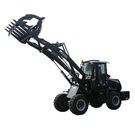

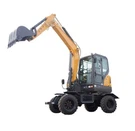
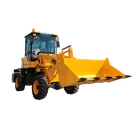

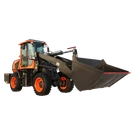
In the realm of heavy machinery, front wheel loaders stand out as indispensable workhorses, especially in construction, mining, and agricultural sectors. At the heart of their remarkable functionality lies the hydraulic system, a complex yet efficient mechanism that enables these machines to perform a wide array of tasks with precision and power. As a front wheel loader supplier, I am thrilled to delve into the intricacies of how the hydraulic system operates in a front wheel loader, shedding light on its components, principles, and significance.
Components of the Hydraulic System in a Front Wheel Loader
The hydraulic system in a front wheel loader is composed of several key components, each playing a crucial role in the overall operation of the machine. These components work in harmony to convert mechanical energy into hydraulic energy and then back into mechanical energy to perform various functions.
Hydraulic Pump
The hydraulic pump is the heart of the hydraulic system. It is responsible for converting mechanical energy from the engine into hydraulic energy by creating a flow of pressurized hydraulic fluid. There are different types of hydraulic pumps used in front wheel loaders, including gear pumps, vane pumps, and piston pumps. Gear pumps are commonly used due to their simplicity, reliability, and cost - effectiveness. They consist of two meshing gears that rotate within a housing, creating a vacuum at the inlet and forcing the hydraulic fluid out at the outlet under pressure.
Hydraulic Reservoir
The hydraulic reservoir serves as a storage tank for the hydraulic fluid. It also allows the fluid to cool down and provides a space for the separation of air and contaminants from the fluid. The reservoir is typically made of steel or plastic and is equipped with a filler cap, a sight glass to monitor the fluid level, and a breather to allow air to enter and exit the tank as the fluid level changes.
Control Valves
Control valves are used to regulate the flow, pressure, and direction of the hydraulic fluid within the system. There are several types of control valves in a front wheel loader, including directional control valves, pressure control valves, and flow control valves. Directional control valves determine the path of the hydraulic fluid, allowing it to flow to different actuators such as the lift cylinders and tilt cylinders. Pressure control valves, on the other hand, maintain the desired pressure in the system by relieving excess pressure. Flow control valves regulate the speed of the actuators by controlling the flow rate of the hydraulic fluid.
Hydraulic Cylinders
Hydraulic cylinders are the actuators of the hydraulic system. They convert the hydraulic energy into linear mechanical force and motion. In a front wheel loader, there are typically two main types of hydraulic cylinders: lift cylinders and tilt cylinders. The lift cylinders are responsible for raising and lowering the loader bucket, while the tilt cylinders are used to tilt the bucket forward and backward. Each cylinder consists of a piston, a cylinder barrel, and a rod. When pressurized hydraulic fluid is applied to one side of the piston, it creates a force that moves the piston and the attached rod, resulting in the desired linear motion.
Hydraulic Hoses and Fittings
Hydraulic hoses and fittings are used to connect the various components of the hydraulic system. They must be able to withstand high pressures and temperatures while maintaining a leak - free connection. The hoses are typically made of synthetic rubber or thermoplastic materials and are reinforced with layers of steel wire or fabric. Fittings are used to connect the hoses to the components and ensure a secure and tight connection.


How the Hydraulic System Works
The operation of the hydraulic system in a front wheel loader can be divided into several stages, each corresponding to a specific function of the machine.
Engine Power Transmission
The process begins with the engine of the front wheel loader. The engine provides the mechanical power necessary to drive the hydraulic pump. The pump is typically connected to the engine through a belt, a chain, or a direct drive system. As the engine rotates, it drives the pump, causing it to draw hydraulic fluid from the reservoir and pressurize it.
Fluid Flow and Pressure Generation
Once the hydraulic pump is operating, it creates a flow of pressurized hydraulic fluid. The pressurized fluid is then directed through the hydraulic hoses to the control valves. The control valves, which are operated by the operator using the control levers in the cab, determine the direction and amount of fluid flow to the different actuators.
Lift and Tilt Operations
When the operator wants to lift the loader bucket, they move the control lever for the lift cylinders. This action causes the directional control valve to direct the pressurized hydraulic fluid to the bottom side of the lift cylinders. As the fluid enters the cylinders, it pushes the pistons upward, extending the rods and raising the loader bucket. To lower the bucket, the control valve is adjusted to direct the fluid to the top side of the cylinders, forcing the pistons downward and retracting the rods.
Similarly, for the tilt operation, when the operator wants to tilt the bucket forward or backward, they move the control lever for the tilt cylinders. The directional control valve then directs the hydraulic fluid to the appropriate side of the tilt cylinders, causing the bucket to tilt in the desired direction.
Pressure Regulation
Throughout the operation, the pressure control valves play a crucial role in maintaining the proper pressure in the hydraulic system. If the pressure in the system exceeds the set limit, the pressure control valve opens, allowing the excess fluid to return to the reservoir. This helps to prevent damage to the components of the hydraulic system due to over - pressure.
Advantages of Hydraulic Systems in Front Wheel Loaders
The use of hydraulic systems in front wheel loaders offers several significant advantages.
High Power Density
Hydraulic systems can generate a large amount of force in a relatively small and compact space. This allows front wheel loaders to have a high lifting capacity and perform heavy - duty tasks despite their relatively small size.
Precise Control
The hydraulic system provides precise control over the movement of the loader bucket. The operator can easily adjust the speed, position, and force of the lift and tilt operations, enabling them to perform tasks with high accuracy.
Smooth Operation
Hydraulic systems offer smooth and continuous operation. The fluid - based nature of the system reduces shock and vibration, resulting in a more comfortable working environment for the operator and less wear and tear on the machine.
Reliability
Hydraulic components are designed to be durable and reliable. With proper maintenance, the hydraulic system in a front wheel loader can operate for a long time without major breakdowns.
Our Front Wheel Loader Offerings
As a front wheel loader supplier, we offer a wide range of high - quality front wheel loaders to meet the diverse needs of our customers. Our product lineup includes the 1 Ton Greenhouse Wheel Loader, which is ideal for small - scale greenhouse operations. It is compact, maneuverable, and has a sufficient lifting capacity for handling various materials in a greenhouse environment.
We also have the 2 Ton Compact Wheel Loader, which is suitable for construction sites with limited space. This loader combines power and compactness, allowing it to perform efficiently in tight areas.
For agricultural applications, our 0.8 Ton Farm Garden Wheel Loader is a great choice. It is designed to handle tasks such as moving hay, manure, and other agricultural materials with ease.
Conclusion
The hydraulic system is the backbone of a front wheel loader, enabling it to perform a wide range of tasks with power, precision, and efficiency. Understanding how the hydraulic system works is essential for operators, maintenance personnel, and anyone involved in the heavy machinery industry. As a front wheel loader supplier, we are committed to providing our customers with high - quality machines equipped with reliable hydraulic systems. If you are interested in our front wheel loaders or have any questions about the hydraulic systems, please feel free to contact us for procurement and further discussions.
References
- "Hydraulic Systems and Fluid Power: Theory and Applications" by Arthur R. Spence
- "Heavy Equipment Technology" by David D. Kohser