


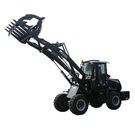
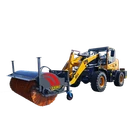


Hey there! As a supplier of orchard wheel loaders, I often get asked this question: "Can an orchard wheel loader be used for soil excavation?" Well, let's dig into this topic and find out.
First off, let's talk a bit about what an orchard wheel loader is. These machines are designed with the specific needs of orchards in mind. They're usually more compact compared to standard wheel loaders, which allows them to maneuver easily between rows of trees. They're also built to be versatile, capable of handling a variety of tasks in the orchard environment, like moving fruits, fertilizers, and other materials.
Now, when it comes to soil excavation, the answer isn't a simple yes or no. It depends on several factors.
Capacity and Power
One of the key factors is the capacity and power of the orchard wheel loader. Our 1.8 Ton CE/EAC Diesel Wheel Loader and 1.2 Ton CE/EAC Wheel Loader have different power ratings and lifting capacities. For small - scale soil excavation, like digging a small ditch for irrigation in an orchard, a 1.2 - ton loader might be sufficient. It can handle loose soil and move it around without too much trouble.
However, if you're looking at more substantial soil excavation, such as creating a large foundation for a new building in the orchard, the 1.8 - ton loader would be a better choice. It has more power and can lift and move larger amounts of soil at once. The engine power of these loaders plays a crucial role here. A more powerful engine can provide the necessary force to break through compacted soil and lift heavy loads.


Bucket Design
The design of the bucket on an orchard wheel loader also affects its soil - excavation capabilities. Most orchard wheel loaders come with a general - purpose bucket that is suitable for a range of tasks. For soil excavation, a bucket with a sharp edge can be very helpful. It can cut into the soil more easily, especially when dealing with harder or more compacted soil.
Some of our Compact Wheel Loader models have buckets that can be adjusted or replaced. This means you can choose a bucket specifically designed for soil excavation if needed. For example, a bucket with teeth can penetrate the soil more effectively, making the excavation process quicker and more efficient.
Terrain and Soil Type
The terrain and soil type in the orchard are important considerations. If the soil is loose and sandy, an orchard wheel loader can do a pretty good job of excavation. The loader can easily scoop up the loose soil and move it to the desired location. However, if the soil is clayey or rocky, the job becomes more challenging.
Clayey soil can be sticky and heavy, which puts more strain on the loader. The bucket may get clogged, and the loader might have trouble lifting and dumping the soil. Rocky soil, on the other hand, can damage the bucket and other parts of the loader. In such cases, you may need to pre - treat the soil, like breaking up the rocks or loosening the clay, before using the loader for excavation.
Operator Skill
The skill of the operator also matters a great deal. An experienced operator knows how to use the loader's features to its fullest potential. They can adjust the speed, lift height, and angle of the bucket to optimize the excavation process. They can also handle any challenges that come up, such as dealing with uneven terrain or difficult soil conditions.
For example, an operator can use the loader's hydraulic system to apply the right amount of force when digging into the soil. They can also use the loader's steering to maneuver around obstacles and ensure that the excavation is done in a straight and efficient manner.
Advantages of Using an Orchard Wheel Loader for Soil Excavation
There are some advantages to using an orchard wheel loader for soil excavation in an orchard setting. Firstly, as mentioned earlier, their compact size allows them to work in tight spaces. You don't have to worry about large, bulky equipment damaging the trees or other structures in the orchard.
Secondly, orchard wheel loaders are relatively easy to operate. Most models come with user - friendly controls, which means that even less - experienced operators can quickly learn how to use them. This can save time and money on training.
Thirdly, these loaders are multi - purpose. After the soil excavation is done, you can use the same loader for other tasks in the orchard, such as moving harvested fruits or spreading fertilizers. This makes them a cost - effective option for orchard owners.
Limitations
Of course, there are also limitations. As we've discussed, the power and capacity of orchard wheel loaders may not be sufficient for large - scale soil excavation projects. If you're planning a major construction project in the orchard, you may need to consider using larger, more specialized excavation equipment.
Also, the wear and tear on the loader can be significant when used for soil excavation. The bucket, tires, and other parts can get damaged more quickly compared to normal orchard tasks. This means you'll need to budget for more frequent maintenance and part replacements.
Conclusion
So, can an orchard wheel loader be used for soil excavation? The answer is yes, but with some limitations. For small - scale, light - duty soil excavation in an orchard, an orchard wheel loader can be a great choice. It offers the flexibility of multi - purpose use and can work well in the confined spaces of an orchard.
If you're interested in our orchard wheel loaders for soil excavation or other tasks in your orchard, feel free to get in touch for a detailed discussion. We can help you choose the right model based on your specific needs and provide you with all the information you need to make an informed decision.
References
- "Wheel Loader Handbook", Industry Publishing Group
- "Orchard Equipment Guide", Agricultural Equipment Association